
The hydrogen economy is the future, but it’s a future built on a foundation of extreme pressure. Compressing, storing, and dispensing H2 at 700 bar (10,000 psi) and beyond is one of the most demanding engineering challenges today. The H2 molecule is small, explosive, and can make traditional metals brittle.
This is a challenge that standard electric drives cannot meet alone. It requires the power density and robust, “cold” power of hydraulics. Carehyd engineers the hydraulic drive and intensifier systems that make the safe compression and handling of high-pressure hydrogen a reality.
Customized Solutions
High Efficiency
Reasonable Pricing
Technical Support and Service
Carehyd is your one-stop shop for hydraulic equipment procurement.
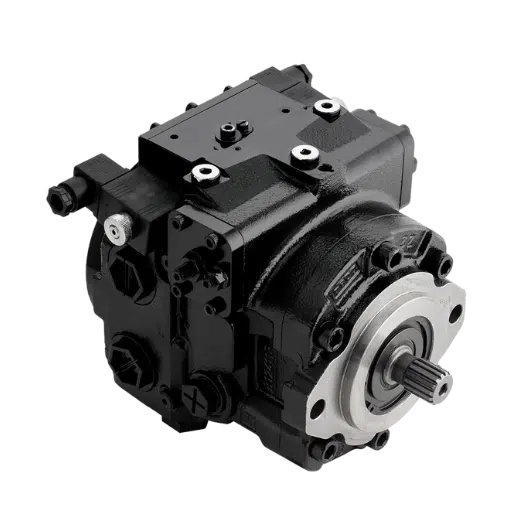
The Unique Challenges of Hydrogen
Hydrogen is not a typical industrial gas. Handling it requires a new level of engineering to overcome its unique properties:
Extreme High Pressures (EHP): To be useful as a fuel, H2 must be compressed to 350, 700, or even 900 bar (13,000+ psi). Generating and containing these pressures is a monumental task.
Hydrogen Embrittlement: Hydrogen is the smallest molecule. It can permeate the grain structure of most metals, causing them to become brittle and fail catastrophically over time.
Extreme Flammability (ATEX/IECEx): H2 is explosive in a very wide range of concentrations. All equipment in the area must be intrinsically non-sparking.
Absolute Purity (Fuel Cell Grade): The H2 gas must remain ultra-pure (ISO 14687) to avoid poisoning the platinum catalysts in fuel cells. This means the compression system cannot contaminate the gas with lubricants.
Carehyd Solutions: From Production to Dispensing
1. Hydrogen Gas Compression (The “Heart” of the System) This is Carehyd’s core application. We provide the hydraulic power systems for Hydraulic-Driven H2 Compressors (Intensifiers). In this design, a hydraulic cylinder drives a non-lubricated “dry” piston or diaphragm. This:
Generates massive pressures (700 bar+) safely.
Completely separates the hydraulic oil from the pure H2 gas stream.
Provides robust, 24/7 power for fueling stations and midstream processing.
2. High-Pressure Valve Actuation In a 10,000 psi system, you cannot operate a valve by hand. We provide high-pressure hydraulic actuators, built from H2-compatible materials, to safely open and close critical isolation and emergency shutdown (ESD) valves.
3. Ground Support & Production (Electrolyzers) In H2 production plants, our compact hydraulic systems provide safe, spark-free power for:
Lifting and servicing heavy electrolyzer stacks.
Material handling in the ATEX-rated compression zones.
High-torque, low-speed drives for H2 purification processes.
FAQs on hydraulic equipment in Hydrogen
How do you handle the risk of H2 embrittlement in your components?
This is the #1 material science challenge. We solve it by material selection. We exclusively use materials proven to be resistant to hydrogen embrittlement in high-pressure service, primarily austenitic stainless steels (like 316/316L) and other specific alloys. We avoid high-strength steels, which are highly susceptible to it.
How does a hydraulic system create 700 bar (10,000 psi) of gas pressure?
By using the Intensification Principle (Pascal's Law). Our HPU generates, for example, 3,000 psi of hydraulic oil pressure. This oil pushes a large hydraulic piston, which is connected to a small H2 gas piston. This area-over-area multiplication (e.g., a 5:1 ratio) "intensifies" the 3,000 psi of oil pressure into 15,000 psi of gas pressure.
How do you guarantee the hydraulic oil never contaminates the ultra-pure H2?
Total Separation. In our compressor-drive designs, the "wet" hydraulic cylinder and the "dry" H2 gas cylinder are two separate, physically distant components. They are connected by a yoke that moves in open air, and a set of specialized seals on the H2 piston are non-lubricated (e.g., polymer). There is zero pathway for oil to contaminate the gas.
Why not just use a high-pressure electric compressor?
Power Density and Safety. An electric drive capable of directly generating 10,000 psi would be enormous, complex, and generate significant heat and spark-risk in the ATEX zone. The Carehyd hydraulic drive is simple, robust, compact (at the point of use), and intrinsically "cold" and spark-free. It's the safest way to deliver this much force.
Is a hydraulic leak a fire risk in an H2 environment?
Yes, any fluid leak is a concern. We engineer for this in three ways: 1) We can use fire-resistant hydraulic fluids (e.g., water-glycol). 2) We use high-integrity, zero-leak fittings (not standard pipe thread). 3) The HPU itself, the main source of fluid, is almost always located in a separate, "safe" room, away from the H2.