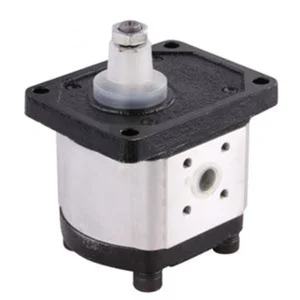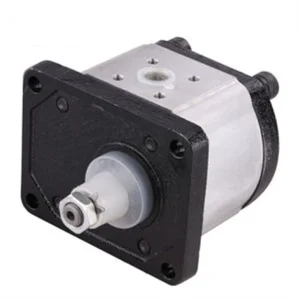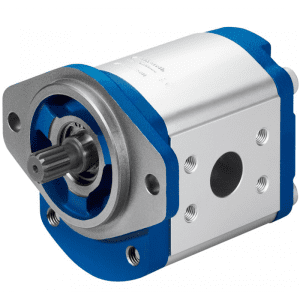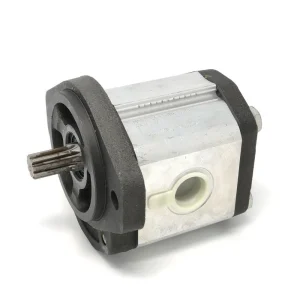

Thin liquid gear pumps are positive displacement pumps designed to transfer low-viscosity fluids with controlled flow and reliable performance. They are used in industrial processes involving chemicals, fuels, lubricants, and other free-flowing liquids where consistent delivery and accurate flow control are important.
However, pumping thin liquids presents specific engineering challenges. Low fluid viscosity can increase internal leakage, reduce volumetric efficiency, and accelerate component wear when the liquid provides insufficient lubrication.
Choosing the right gear pump requires understanding how viscosity, operating pressure, internal clearances, materials, and pump construction affect performance.
This guide explains how thin liquid gear pumps work, their advantages, common industrial applications, and the key factors to consider when selecting a pump for low-viscosity fluids.
What Are Thin Liquid Gear Pumps?
Thin liquid gear pumps are rotary positive displacement pumps designed or configured to handle fluids with relatively low resistance to flow.
In industrial pump applications, liquids below approximately 20 centistokes (cSt) are often classified as low-viscosity fluids, although the exact definition varies among manufacturers and applications.
Common examples include:
- Water and diluted aqueous solutions
- Light petroleum products and diesel fuel
- Industrial solvents and cleaning chemicals
- Low-viscosity lubricating oils
- Certain pharmaceutical and chemical solutions
- Thin coatings, additives, and specialty fluids
Not every gear pump can handle every liquid on this list. Chemical compatibility, lubricating properties, and the pump’s specified operating range must always be evaluated.
Unlike centrifugal pumps, which transfer energy to a liquid through a rotating impeller, gear pumps move fluid by mechanically trapping and displacing a defined volume during each rotation.
This positive displacement principle makes appropriately designed gear pumps useful for metering, dosing, and controlled fluid transfer.
How Do Thin Liquid Gear Pumps Work?
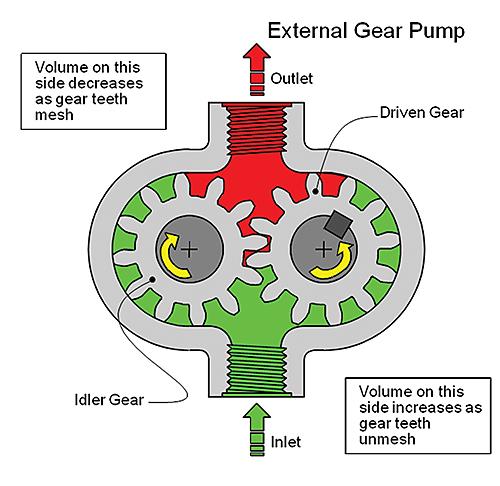
The working principle of a thin liquid gear pump is based on the rotation and interaction of gears inside a closely fitted housing.
As the gears rotate, they create changing volumes that draw liquid into the pump and transport it toward the discharge port.
Step 1: Fluid Enters the Pump
When the gear teeth separate near the inlet, the expanding cavities create a pressure reduction.
Liquid enters the pump through the suction port, provided sufficient inlet pressure is available.
Step 2: Fluid Is Transported
The liquid becomes trapped in spaces between the gear teeth and the pump housing.
As the gears rotate, these spaces carry the liquid around the outer flow passages toward the discharge side.
Step 3: Fluid Is Discharged
At the outlet, the gears mesh or the pumping cavities decrease in volume, displacing liquid into the discharge line.
This process repeats continuously, producing a relatively smooth flow with limited pulsation.
Understanding Gear Pump Flow Rate
The theoretical flow rate of a gear pump depends primarily on its displacement and rotational speed.
The actual delivered flow is lower because some liquid leaks internally through the small clearances between moving components.
A simplified relationship is:
Actual Flow Rate = Pump Displacement × Rotational Speed × Volumetric Efficiency
For example, consider a pump operating with:
- Displacement: 5 cm³/revolution
- Speed: 1,200 rpm
- Assumed volumetric efficiency: 80%
The estimated flow rate would be:
5 × 1,200 × 0.80 ÷ 1,000 = 4.8 L/min
This calculation is illustrative. Actual performance must be confirmed using the manufacturer’s performance curves at the required viscosity and differential pressure.
With thin liquids, volumetric efficiency can decrease substantially as differential pressure increases.
Main Types of Thin Liquid Gear Pumps
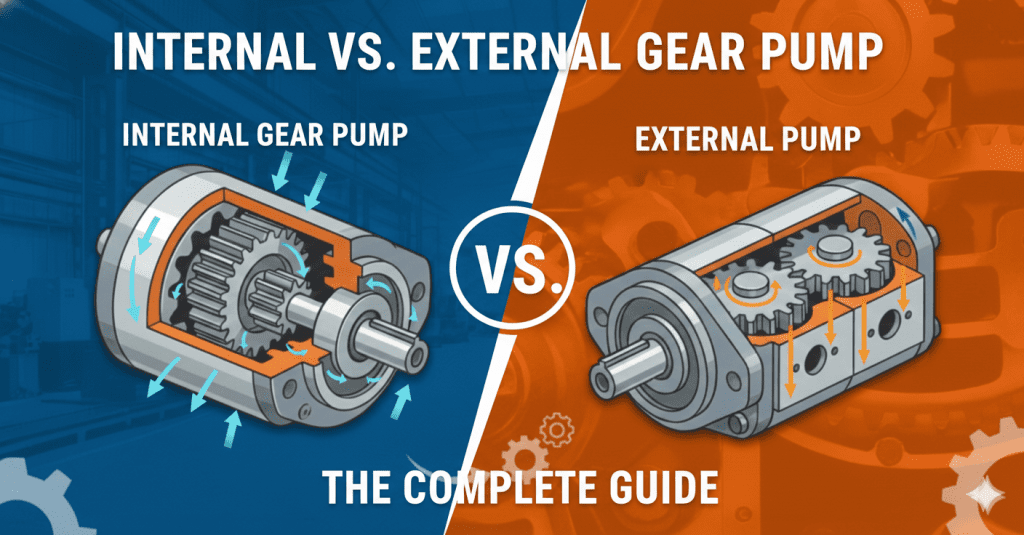
Two common designs used in low-viscosity fluid applications are external gear pumps and internal gear pumps.
Both operate using positive displacement, but their construction and operating characteristics differ.
1. External Gear Pumps
External gear pumps contain two gears with external teeth positioned side by side within a housing.
One gear is driven by a motor, while the second rotates through its engagement with the driving gear.
Liquid is transported around the outside of the gears and discharged as the teeth mesh.
Key advantages:
- Compact construction
- Relatively simple mechanical design
- Repeatable flow delivery
- Wide availability of displacement sizes
- Suitable for precision transfer when correctly specified
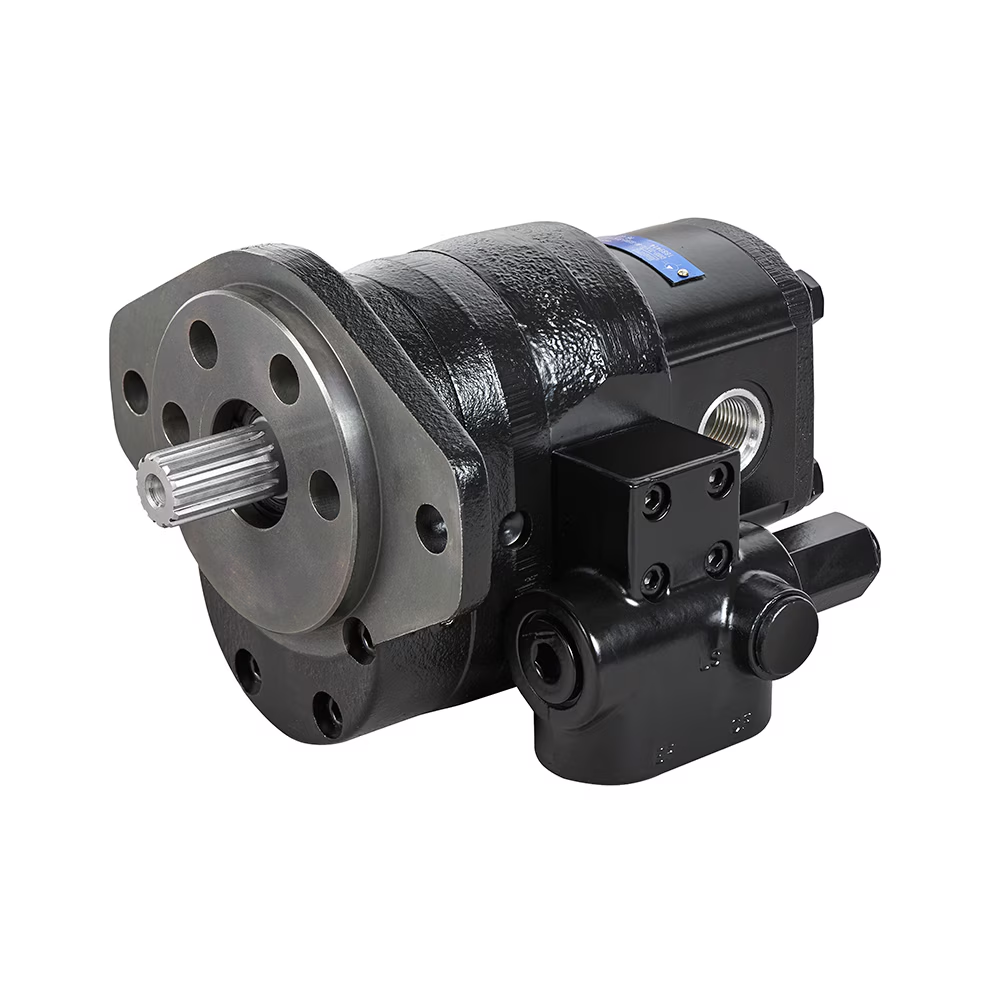
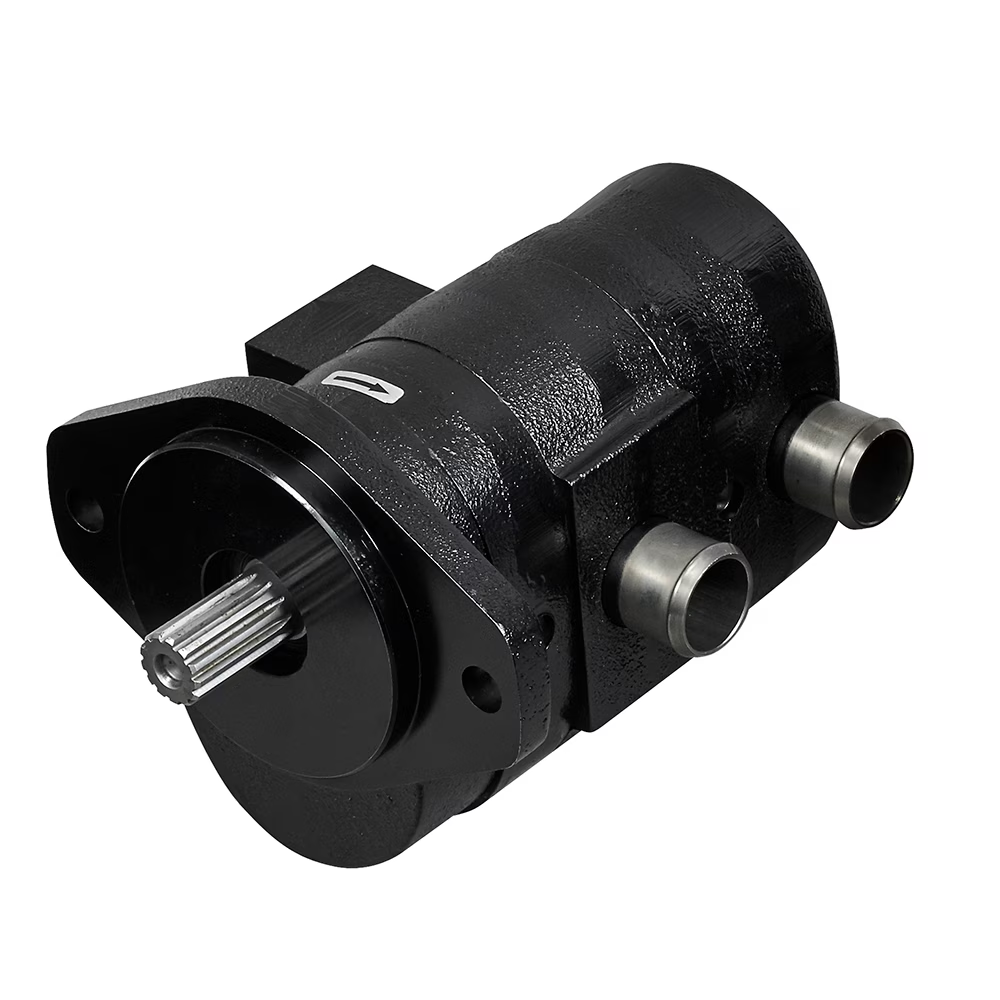
External gear pumps are frequently used in lubrication systems, hydraulic circuits, chemical metering equipment, and compact fluid transfer systems.
For low-viscosity applications, particular attention must be given to internal clearances, bearing materials, and fluid lubricity.
A conventional hydraulic gear pump designed for lubricating oil should not automatically be used for water, solvents, or other poorly lubricating liquids.
2. Internal Gear Pumps
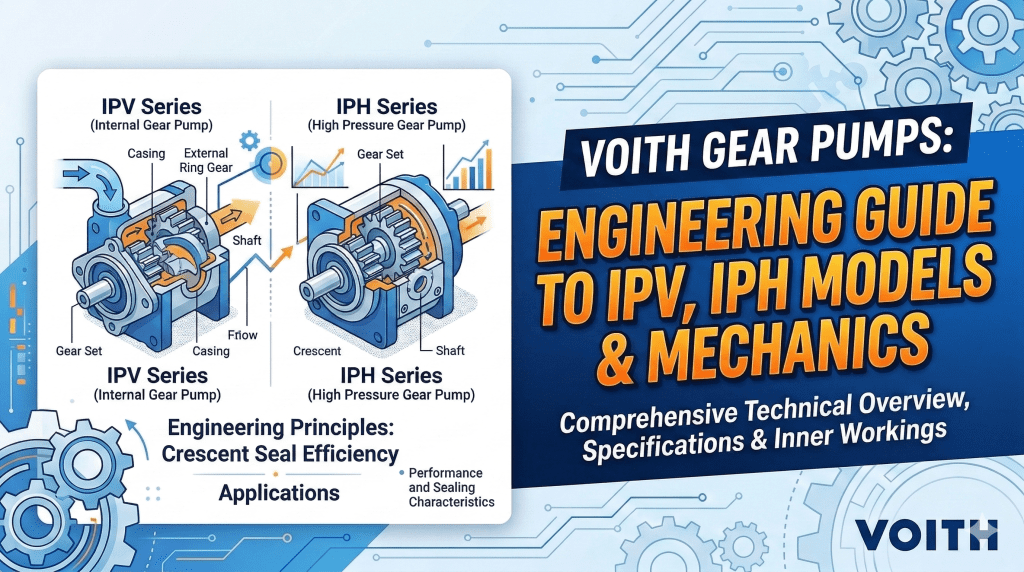
Internal gear pumps use an internally toothed rotor and a smaller external-tooth idler gear.
Many designs incorporate a stationary crescent-shaped component to separate the suction and discharge regions.
Their configuration allows fluid to move through expanding and contracting chambers as the gears rotate.
Key advantages:
- Relatively smooth flow delivery
- Availability in a broad range of capacities
- Suitable designs for both low- and high-viscosity liquids
- Adjustable internal clearances on certain models
- Useful for industrial transfer and metering applications
Internal gear pumps are commonly found in petroleum transfer, chemical processing, and industrial lubrication systems.
Some designs are particularly effective for thin liquids because their clearances and component materials can be optimized for low-viscosity service.
However, neither internal nor external gear pumps are universally superior. The correct choice depends on actual operating conditions and the specific pump design.
3. Magnetic Drive Gear Pumps
Magnetic drive is a drive and sealing configuration rather than a separate gear-meshing principle.
A magnetic coupling transfers torque to the pump without a conventional rotating shaft seal penetrating the fluid containment boundary.
Magnetic drive gear pumps may be suitable for applications involving:
- Volatile solvents
- Corrosive chemicals
- Valuable process liquids
- Fluids requiring a high level of containment
Their main advantage is reduced external leakage risk associated with dynamic shaft seals.
However, magnetic drive pumps still require adequate cooling, lubrication, and suitable operating conditions. They should not be assumed capable of dry running.
Advantages of Thin Liquid Gear Pumps
When properly engineered for the application, thin liquid gear pumps offer several operational benefits.
Accurate and Repeatable Flow Control
Gear pumps displace a predictable volume of liquid with each revolution.
This makes them useful for applications where controlled flow delivery is necessary.
When combined with a variable-speed drive and appropriate feedback controls, they can provide repeatable performance in liquid dosing and metering systems.
Actual dosing accuracy depends on internal slip, fluid viscosity, operating pressure, and control-system design.
Smooth Fluid Transfer
Compared with some other positive displacement pump technologies, gear pumps can provide relatively low-pulsation flow.
This characteristic is beneficial for equipment requiring stable fluid delivery, including coating processes and chemical injection systems.
Compact and Robust Construction
Gear pumps generally offer high displacement capability relative to their physical size.
Their compact design allows integration into industrial equipment where installation space is limited.
Flexible Flow Adjustment
Because delivered flow generally increases with rotational speed, operators can adjust pump output by controlling motor speed.
However, pump speed must remain within the manufacturer’s approved limits, and increasing speed is not a substitute for resolving inadequate inlet conditions.
Versatility Across Industrial Applications
Different gear pump designs can handle a wide range of fluid viscosities and operating pressures.
Selecting the correct materials, clearances, and sealing arrangement allows these pumps to serve diverse industrial applications.
Key Challenges When Pumping Thin Liquids
Although gear pumps offer important advantages, low-viscosity fluid handling requires careful engineering.
1. Internal Leakage and Pump Slip
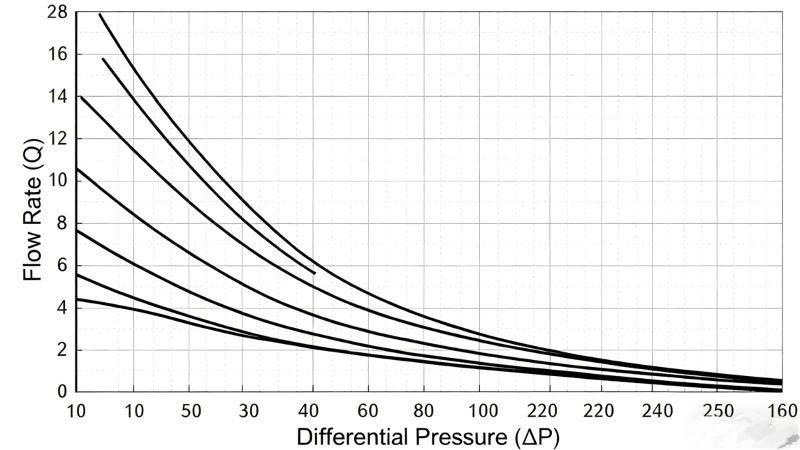
Internal leakage, commonly called slip, is one of the most significant challenges affecting thin liquid gear pumps.
Slip occurs when liquid flows backward from the high-pressure discharge region toward the lower-pressure inlet through small internal clearances.
Because thin liquids offer less resistance to this backflow, they generally experience greater slip than more viscous fluids under comparable conditions.
Internal leakage tends to increase when:
- Fluid viscosity decreases
- Differential pressure increases
- Internal clearances become larger
- Components experience wear
- Operating temperature reduces liquid viscosity
Excessive slip can reduce actual flow, decrease volumetric efficiency, and increase internal fluid recirculation.
Solution: Select a pump with clearances and materials specifically engineered for the required viscosity and operating pressure.
2. Insufficient Lubrication
Many gear pumps rely on the pumped liquid to lubricate internal bearings, bushings, and contact surfaces.
Certain thin liquids, particularly water and some solvents, provide limited lubrication.
Without suitable component materials, this can lead to friction, accelerated wear, and premature failure.
Solution: Use appropriate bearing and gear materials selected for the liquid’s lubricity and chemical properties. Depending on the application, these may include engineered polymers, carbon-based materials, or specialized bearing combinations.
3. Cavitation and Inadequate Suction Conditions
Cavitation occurs when local liquid pressure falls below its vapor pressure, causing vapor bubbles to form.
Volatile liquids and systems with excessive suction-line pressure loss can be particularly vulnerable.
Potential symptoms include abnormal noise, vibration, fluctuating flow, and component damage.
Solution: Maintain adequate inlet pressure, minimize suction restrictions, control fluid temperature, and verify the pump’s required suction conditions.
4. Chemical Compatibility
Thin industrial liquids may contain aggressive chemicals capable of attacking seals, housing materials, or internal components.
Material incompatibility can result in corrosion, swelling, leakage, or mechanical failure.
Solution: Verify the compatibility of every wetted component, including gears, shafts, bushings, elastomers, and housing materials.
Industrial Applications of Thin Liquid Gear Pumps
Thin liquid gear pumps are used in industries requiring controlled transfer of low-viscosity fluids.
Chemical Processing
Chemical manufacturing facilities use suitable gear pumps for transferring and metering selected solvents, additives, and processing chemicals.
Pump materials and sealing arrangements must be compatible with the chemical and its operating temperature.
Oil, Fuel, and Petroleum Applications
Gear pumps are widely used for handling light fuel oils, diesel, refined petroleum products, and lubricating fluids.
They can provide controlled transfer rates and reliable operation when designed for the product’s viscosity and lubricating characteristics.
Lubrication Systems
Industrial lubrication systems frequently use gear pumps to circulate or deliver oil to bearings, gearboxes, and mechanical equipment.
Careful pump selection is important when low-viscosity oils are used or when fluid viscosity decreases at elevated temperatures.
Food and Beverage Processing
Specially designed sanitary gear pumps may be used for low-viscosity ingredients, flavor concentrates, edible liquids, and processing additives.
Food-contact material compliance, hygienic construction, cleanability, and contamination control must be verified for each application.
Pharmaceutical and Laboratory Equipment
Precision gear pumps can support controlled liquid handling in specialized pharmaceutical, research, and laboratory systems.
Applications requiring pharmaceutical or hygienic compliance need equipment specifically qualified for the intended process.
Printing, Coating, and Chemical Metering
Specialized gear pumps may also be used for transferring filtered inks, coatings, solvents, and additives.
Stable flow delivery supports consistent processing conditions, while filtration helps protect close-clearance internal components.
How to Choose the Right Thin Liquid Gear Pump
Selecting the correct pump requires more than matching a nominal flow rate.
The following factors should be evaluated before purchasing a low-viscosity gear pump.
1. Fluid Viscosity
Determine the fluid’s actual viscosity at the minimum, normal, and maximum operating temperatures.
Viscosity can change significantly as temperature changes.
Pump performance at room temperature may differ considerably from performance under actual operating conditions.
Also distinguish between dynamic viscosity, commonly expressed in cP, and kinematic viscosity, commonly expressed in cSt. They are related through fluid density but are not universally interchangeable.
2. Required Flow Rate
Identify the minimum, normal, and maximum required flow rates.
Select a displacement and rotational speed capable of producing the required actual flow after allowing for internal slip.
Manufacturer performance data should be used instead of theoretical displacement alone.
3. Operating Pressure
Determine the required differential pressure between the pump inlet and outlet.
Higher differential pressure increases mechanical loading and typically increases internal leakage.
The pump’s allowable differential pressure, maximum inlet pressure, and overall pressure ratings must all be checked.
4. Pump Materials
Choose housing, gear, shaft, and bearing materials compatible with the liquid.
Depending on the application, suitable materials may include stainless steel, cast iron, engineered polymers, carbon-based materials, and specialized bearing materials.
The correct choice depends on chemical compatibility, lubrication, temperature, and mechanical loading.
5. Sealing Requirements
Determine whether the application requires a conventional shaft seal or a sealless magnetic drive design.
For hazardous or volatile chemicals, containment requirements may be a major selection factor.
6. Suction Conditions
Check the available inlet pressure and the possibility of vapor formation.
Where applicable, verify that the available net positive suction head exceeds the manufacturer’s requirements with an appropriate margin.
Short, adequately sized suction piping generally helps minimize pressure losses.
7. Fluid Cleanliness and Operating Duty
Gear pumps often contain small internal clearances that can be damaged by abrasive particles.
Verify filtration requirements, continuous-duty ratings, rotational speed limits, and permissible operating temperatures.
A suitable pressure-relief arrangement is also essential because a positive displacement pump can generate damaging pressure if its discharge becomes blocked.
Quick Selection Checklist
| Selection Factor | Information Required |
|---|---|
| Fluid type | Chemical name and composition |
| Viscosity | Minimum and maximum viscosity at operating temperatures |
| Flow rate | Required L/min or m³/h |
| Pressure | Inlet pressure and differential pressure |
| Temperature | Normal and maximum operating temperature |
| Materials | Corrosion resistance and lubricity requirements |
| Sealing | Mechanical seal or magnetic drive |
| Operating duty | Continuous or intermittent operation |
| Fluid cleanliness | Particle content and filtration requirements |
Providing this information to the pump manufacturer helps prevent incorrect sizing and premature equipment failure.
Maintenance Tips for Thin Liquid Gear Pumps
Preventive maintenance is essential for preserving performance and extending service life.
Monitor Flow Rate and Pressure
Regularly compare actual operating flow and differential pressure against the pump’s baseline performance.
An unexplained reduction in flow may indicate increased internal leakage, mechanical wear, or a change in operating conditions.
Inspect Seals and Connections
Check for external leakage, damaged gaskets, and deterioration of sealing components.
Special attention is required when transferring chemicals or volatile liquids.
Maintain Proper Inlet Conditions
Keep suction filters and piping free of excessive restrictions.
Ensure the pump remains properly filled and primed according to the manufacturer’s instructions.
Avoid Dry Running
Most close-clearance gear pumps should not operate without liquid unless specifically designed for dry-running service.
Running without sufficient lubrication or cooling can quickly damage internal components.
Check for Abnormal Noise and Temperature
Unexpected vibration, noise, or temperature increases may indicate cavitation, bearing damage, misalignment, or improper operating conditions.
Follow Manufacturer Maintenance Guidelines
Inspect internal clearances, gear surfaces, bearings, and seals at intervals appropriate to the operating duty.
Always isolate, depressurize, and safely drain the system before maintenance.
Thin Liquid Gear Pumps vs. Standard Gear Pumps
One common misconception is that any industrial gear pump can handle low-viscosity liquids.
In reality, a standard gear pump may be designed primarily for lubricating oils or more viscous fluids.
When used with extremely thin liquids, inappropriate pump designs may suffer from increased slip, inadequate bearing lubrication, and accelerated wear.
Gear pumps specifically designed for thin-liquid applications may incorporate optimized internal clearances, alternative gear or bearing materials, and specialized sealing systems.
The most important distinction is not the pump’s name, but whether its construction and verified performance match the actual fluid and operating conditions.
Frequently Asked Questions About Thin Liquid Gear Pumps
What is a thin liquid gear pump?
A thin liquid gear pump is a positive displacement pump designed or configured to transfer relatively low-viscosity liquids. It uses rotating gears to move fluid from the inlet to the outlet, allowing controlled flow delivery in suitable industrial applications.
What viscosity range can thin liquid gear pumps handle?
The acceptable viscosity range depends on the pump design. Low-viscosity applications are often associated with fluids below approximately 20 cSt, but some specialized gear pumps can operate at around 1 cSt or lower. Always verify the manufacturer’s minimum viscosity rating.
Can gear pumps be used to pump water?
Yes, but only when the pump is specifically designed for water or similarly low-lubricity liquids. Conventional oil-lubricated hydraulic gear pumps may experience excessive wear when used with water.
Which is better for thin liquids: internal or external gear pumps?
Both can perform effectively when properly designed. External gear pumps are often selected for compact, controlled-flow applications, while internal gear pumps offer advantages in certain industrial transfer duties. Actual performance depends on pump clearances, materials, pressure, speed, and fluid properties.
Why does a gear pump lose flow when pumping thin liquids?
Low-viscosity liquids can flow backward through internal pump clearances more easily, increasing slip and reducing volumetric efficiency. Higher differential pressure and internal wear can make this problem more severe.
Are thin liquid gear pumps suitable for chemical dosing?
Yes. Properly selected gear pumps can provide repeatable flow for chemical dosing and metering. However, dosing accuracy depends on the pump’s operating conditions, mechanical design, and any associated flow measurement or control system.
Conclusion
Thin liquid gear pumps are an effective solution for many low-viscosity fluid transfer and metering applications, provided they are selected for the specific liquid and operating conditions.
Their positive displacement principle offers controlled fluid delivery, compact construction, and flexible speed adjustment.
However, low-viscosity applications require careful consideration of internal slip, fluid lubricity, chemical compatibility, suction conditions, and pump materials.
The best results come from selecting a pump based on verified performance data rather than nominal flow capacity alone.
Need Help Selecting a Thin Liquid Gear Pump?
Choosing the right gear pump can improve process stability, reduce maintenance requirements, and help extend equipment service life.
Contact our team for technical assistance and pump selection support. Provide your fluid type, viscosity, required flow rate, operating pressure, and temperature so we can help identify a suitable pumping solution for your industrial application.